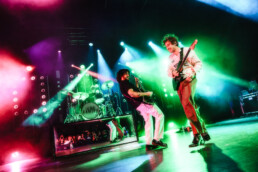
Louis Tomlinson has had one of the most interesting career arcs of any modern artist. At eighteen years old, he catapulted to global stardom with One Direction, and in the decade since the band went their separate ways he’s rebuilt his career as a solo artist by chasing authenticity over commercial accolades.
“…so many people focus on the “end game” without enjoying the doing …what I should be doing is forgetting about perception and to a certain degree worry less about being defined on commercial success.”
-Louis Tomlinson via Twitter, 2019
Six years ago, ahead of his debut solo album, Walls, Tomlinson told Rolling Stone that it “took him a second to be at peace” with that concept. The shift from selling out stadiums as part of the band to standing alone in smaller venues forced him to confront the expectations and aspirations for his career that were shaped around the insanely high experiences of his past. After all, when you start out on top of the world, what direction do you go from there?
Speaking to Steven Barlett on the Diary of a CEO Podcast in 2025, Tomlinson recalled that “…what was really strange was being twenty four years old and realizing that the only way is down from it. There is no alternative reality where I at least keep up or supersede. No way. There was no chance of that. That was very obvious. It was very obvious to anyone around it. Still, it’s something that is challenging, definitely, because you’ve had a look behind the curtain.”
Tomlinson ultimately went the direction of striving for authenticity in his artistry, leaning into lyricism and focusing on creating work he loved. His first solo album, Walls, debuted in 2020 with an intimate performance in London, marking the beginning of a new chapter built on artistic identity rather than commercial success.
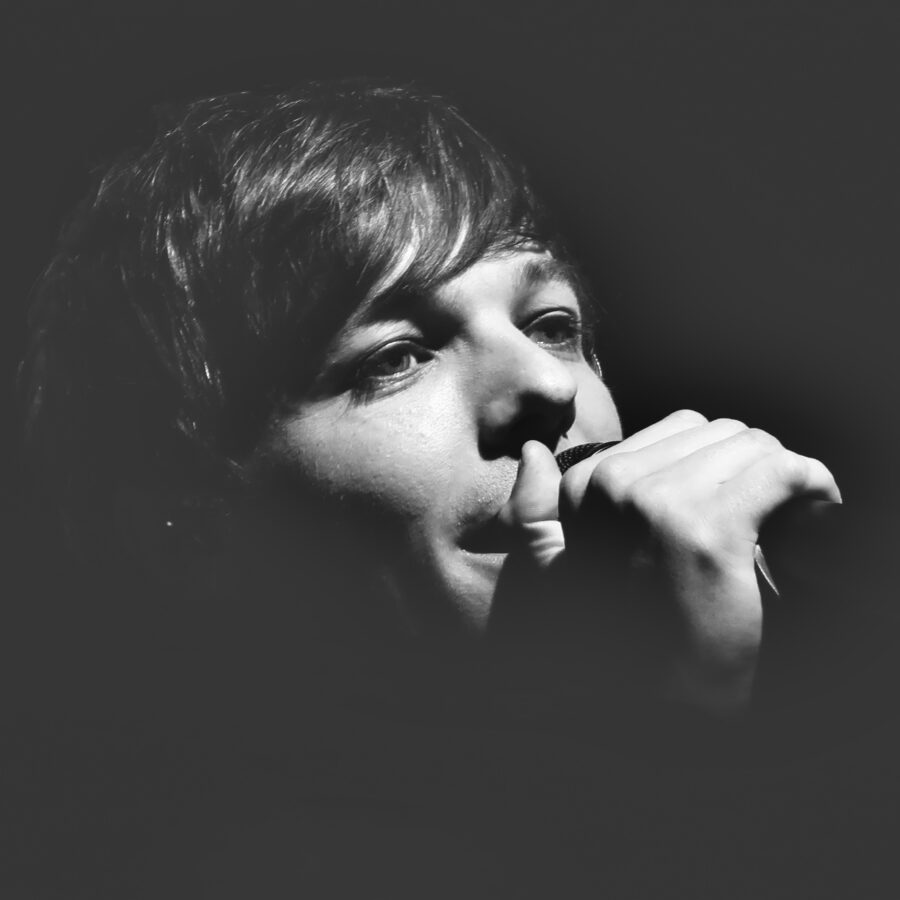
Louis Tomlinson at his “Walls” release show in 2020. Photo by Abigail Blascovich
Tomlinson gradually built his own sound and audience, riding out the highs and lows of that journey with unwavering dedication and a truly impressive level of perspective. In the same interview with Steven Bartlett, he brought up a memory that put that perspective to the test.
“I do Night Changes on my tour show. I can remember this one show in particular. I think it was a 5,000-capacity room. I think maybe we’d done 1,200 tickets, which is okay. That’s all right. But when you’re singing Night Changes at a gig like that, when you can vividly and visually remember singing Night Changes like that at, say, Wembley Stadium, and you’re literally singing, Look How Fast The Night Changes, and you’re looking out to this sparse room, it’s like a brutal poetry.”
The brutality of that poetry perhaps softens with the realization that the night doesn’t stop changing – because six years and two albums after that Walls release show, Louis Tomlinson sold out Madison Square Garden.
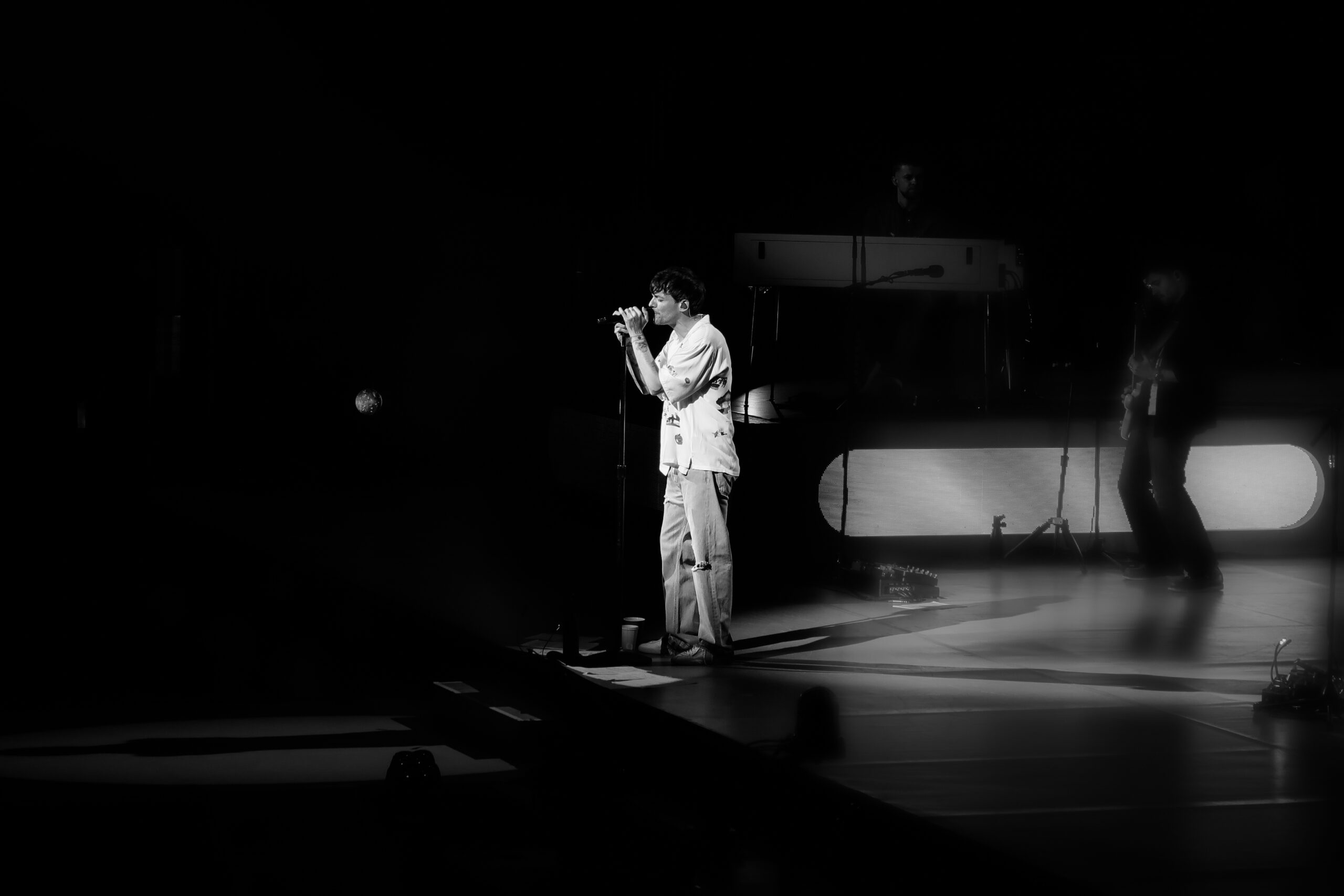
Louis Tomlinson at Madison Square Garden. Photo by Abigail Blascovich
Tomlinson’s How Did I Get Here Tour is a celebration for everyone and everything that got him to this moment: a sold-out solo debut at the world’s most famous arena. It’s surreally full-circle, and it’s also living proof that authenticity in music can still gain commercial success even with limited radio and industry support.
Tomlinson’s focus on authentic artistry is apparent in every aspect of his show, from the physical stage design to the visual motifs that provide a backdrop for the music and at times act as the main focus in between songs. What’s more subtle is the way his boy-band roots show up in the way he shares the stage and interacts with his band, allowing them all their own moments to shine instead of relegating them to background roles.
Tomlinson’s emotional connection amongst the audience is tangible. Throughout the show, he’s beaming onstage, visibly elated and grateful to be where he is. When he performs Night Changes to insane applause, it sounds like a homecoming.
As the show comes to a close, he expresses his gratitude to the fans that packed Madison Square Garden and brought him to “one of the greatest nights of his professional life”.
“I’ve been reflecting, I’ve been thinking about my career. This is an important night for me, it’s an important night for us as a collective… I feel really, really, really fucking proud of what we’ve created.”
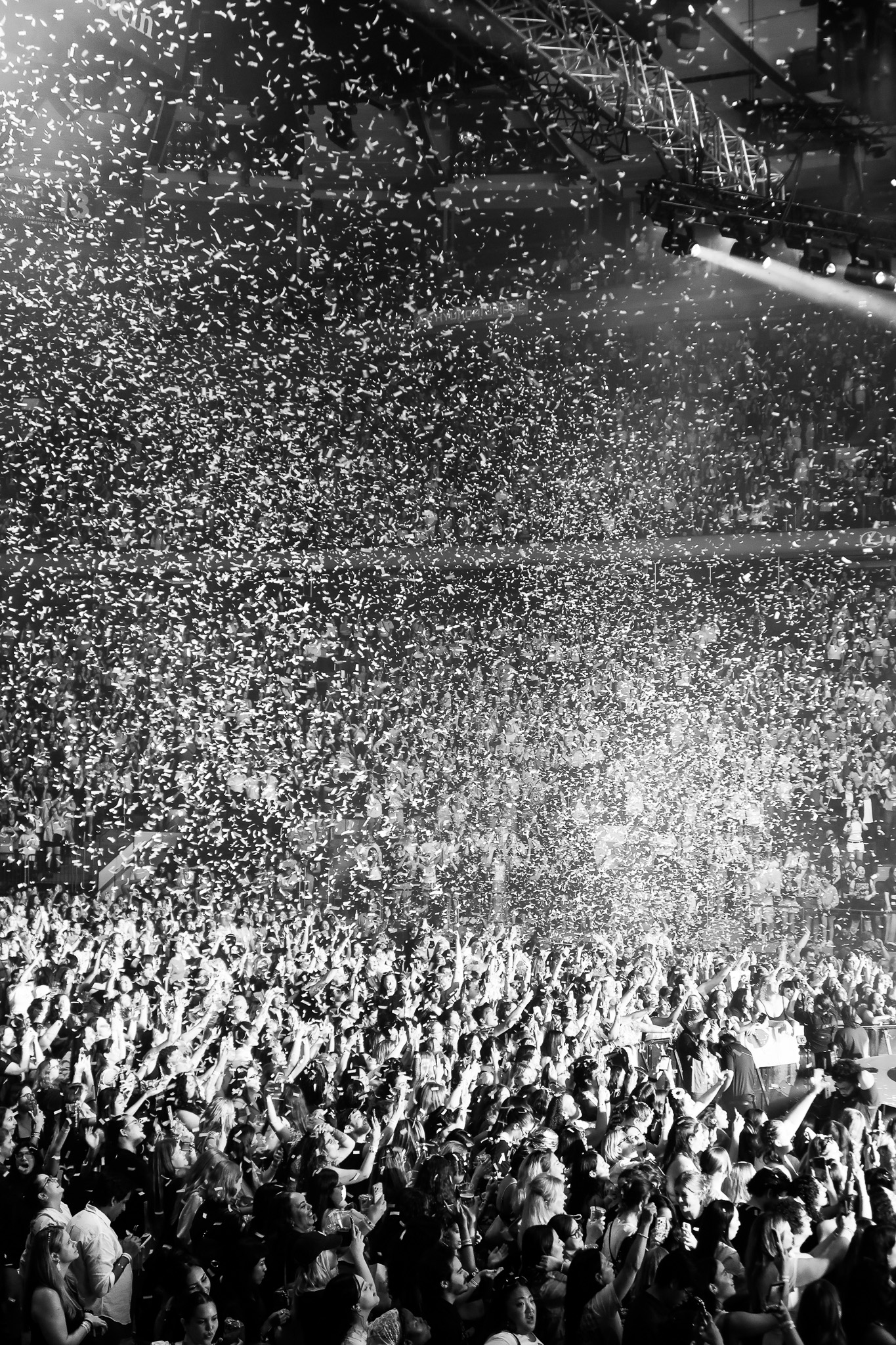
The Crowd for the “How Did We Get Here” Tour at Madison Square Garden. Photo by Abigail Blascovich